How to Meal Prep on a Budget: Free Planner Template
Meal prep on a budget with batch cooking, smart shopping lists, and cost tracking. Cut your grocery bill to £30/week. Get the template.

From Sort & Keep, the maker of the linked templates. Our current product prices update with your selected currency. Worked examples and third-party prices keep their stated currency and date.
The average UK family spends £5,028 per year on groceries, according to the ONS Family Spending report. That's £97 a week. But here's the number that should bother you more: roughly 30% of what we buy ends up in the bin. That's £1,500 a year thrown away because we bought too much, cooked too much, or forgot what was hiding at the back of the fridge. Meal prep on a budget fixes both problems at once. You spend less and you waste less.
We've been testing meal prep systems for over a year. Apps, spreadsheets, Notion templates, pen-and-paper methods. The approach that consistently saves the most money is also the simplest: a well-built spreadsheet that tracks what you plan, what you spend, and what you actually eat. No subscription. No algorithm deciding what you should cook. Just a system that makes your money go further.
This guide walks through the exact framework we use to feed one person for £30 a week. Roughly 2,000 calories per day with balanced macros. And introduces the free planner template that makes it practical.
How to Meal Prep on a Budget for £30/Week
Meal prep on a budget comes down to four steps: plan, batch cook, portion, and store. Miss any one and you'll either overspend or burn out within a fortnight. Here's how each step works in practice.
Plan: Pick 4-5 Meals, Not 21
The biggest mistake new meal preppers make is trying to plan every single meal from scratch. You don't need 21 unique meals per week. You need 4-5 solid recipes that you batch cook and rotate. Repetition is the engine that makes budget meal prep work. It simplifies your shopping list, reduces waste, and lets you buy ingredients in bulk.
Here's a real weekly menu we've run at £30 or under:
| Meal | Recipe | Servings | Cost |
|---|---|---|---|
| Breakfast (daily) | Overnight oats with banana and peanut butter | 7 | £3.50 |
| Lunch (Mon-Fri) | Chicken thigh, rice, and roasted veg bowls | 5 | £8.00 |
| Lunch (Sat-Sun) | Lentil soup with crusty bread | 2 | £2.50 |
| Dinner (Mon-Thu) | Turkey mince chilli with brown rice | 4 | £7.50 |
| Dinner (Fri-Sun) | Pasta with tinned tomato and chickpea sauce | 3 | £4.00 |
| Snacks | Carrots, hummus, rice cakes, apples | 7 days | £4.50 |
| Total | £30.00 |
Use this menu as an example and adapt the meals and portions to your household.
Batch Cook: One Session, Five Days of Food
Sunday afternoon. Two to three hours. You cook everything for the week in one go. Rice on the hob, chicken thighs and veg in the oven, turkey chilli on the stovetop, lentil soup simmering, overnight oats assembled in jars. Everything cooks in parallel. By the time you clean up, you have a full week of food ready.
Portion and Store
Divide everything into individual containers and label them. This takes 15 minutes and prevents the biggest source of meal prep waste. Eating too much on Monday, leaving nothing for Thursday. Fridge life for most prepped meals: 4-5 days. Anything beyond that goes in the freezer. Chilli and lentil soup freeze brilliantly. Chicken bowls less so (rice texture suffers), which is why we schedule those for Monday to Friday.
Why Spreadsheets Beat Apps for Budget Meal Prep
Compare meal-planning tools by how they record quantities, prices and the meals you want to prepare.
Here's the problem: meal planning apps don't know what things cost at your local Tesco, Aldi, or Lidl. They can't track the difference between what you estimated and what you actually spent. They can't generate a shopping list sorted by store aisle so you're not doubling back for the tinned tomatoes you walked past ten minutes ago.
A spreadsheet does all of this because you control the data.
Customise for local prices. The same 500g bag of chicken thighs costs £2.50 at Aldi and £4.00 at Sainsbury's. Your spreadsheet reflects your store, your prices, and your budget. An app uses national averages that mean nothing at checkout.
Track actual costs vs estimated. Planning to spend £30 is step one. Knowing you actually spent £33.50 because mince was 40p more than last week. That's the data that lets you adjust. Over a month, these small variances compound into real savings or real overspend.
Generate shopping lists sorted by store aisle. Group your ingredients by category. Produce, dairy, meat, tinned goods, dry goods, frozen. Walk the store once, in order, and get out. Fewer impulse buys, less time in the supermarket, lower total spend.
best meal planning spreadsheet templates roundup.
Setting Up Your Budget Meal Prep Spreadsheet
Whether you use our free planner or build your own, a budget meal prep spreadsheet needs four components working together. Here's what each one does and why it matters.
1. Ingredients Database with Prices
This is the foundation everything else builds on. A table of every ingredient you regularly use, with columns for:
- Ingredient name
- Unit (g, ml, each)
- Pack size (as sold in your store)
- Pack price
- Price per unit (calculated automatically)
- Store where you buy it
- Category (produce, dairy, meat, etc.)
Start with 30-40 ingredients you actually buy. You're not building a food encyclopaedia. Add items as you use them. After a month, you'll have a personalised price database that no app can match for accuracy.
2. Weekly Meal Plan Grid
A simple 7-day by 4-row grid (breakfast, lunch, dinner, snacks). Select a recipe for each slot. The spreadsheet pulls ingredients from your database and calculates the total cost for that day and that week.
The grid also shows a running calorie and macro total so you can see at a glance whether Thursday is looking light on protein or heavy on carbs.
3. Auto-Generated Shopping List
This is where the time savings live. The spreadsheet scans your weekly plan, aggregates all the ingredients across every meal, combines duplicates (you don't need "400g rice" listed three times), and outputs a single shopping list grouped by store category.
It also shows the estimated cost for each item and a total at the bottom. If the total exceeds your budget, you can see exactly which items are pushing you over and swap in cheaper alternatives before you leave the house.
4. Cost-Per-Meal Calculator
Knowing that your weekly shop cost £30 is useful. Knowing that your turkey chilli costs £1.88 per serving while your chicken bowls cost £1.60 is more useful. The cost-per-meal view helps you identify which recipes give you the best value and which ones are quietly draining your budget.
Over time, this data reveals patterns. You'll notice that meals built around lentils, chickpeas, and root vegetables consistently come in under £1.50 per serving, while anything involving fresh fish or out-of-season veg pushes past £3.00. That knowledge shapes better meal plans automatically.
Meal Prep on a Budget: Options to compare
We evaluated five approaches to budget meal prep planning, from free templates to paid apps. Here's what we found.
1. Sort & Keep Free Weekly Meal Planner
Platform: Google Sheets & Excel | Price: Free
This is our entry-level planner and it's the one we recommend for anyone starting out with budget meal prep. It includes a weekly meal plan grid, auto-generated grocery list, basic macro tracking, and. Critically. A cost tracking column that lets you log what you actually spent versus what you planned.
Pros:
- Genuinely free. No email gate, no feature restrictions, no upsell
- Grocery list auto-generates from your weekly plan
- Cost tracking built in from day one
- Works in Google Sheets and Excel
- Clean interface that doesn't overwhelm
Cons:
- Ingredient database is basic. You'll need to add your own prices
- No dietary restriction filtering
- Single-person design, not optimised for families
- Macro tracking is basic (calories, protein, carbs, fat. No micronutrients)
Verdict: The best free starting point for budget meal prep. It does the four things that matter. Plan, list, track, calculate. Without charging you for the privilege. You'll outgrow it if you need dietary-specific features, but for pure budget tracking it handles the job.
Download the Free Weekly Meal Planner | Also on Sort & Keep
2. Google Sheets DIY Template
Platform: Google Sheets | Price: Free
You can build your own meal prep spreadsheet from scratch in Google Sheets. The template gallery has a basic meal planner, and there are hundreds of community-built variations on Reddit and YouTube.
Pros:
- Completely free
- Total control over every formula and layout
- Cloud-based and shareable
- No limits on customisation
Cons:
- You're building everything yourself. Formulas, lookups, conditional formatting
- Most free templates are just a grid with no automation
- No cost tracking unless you build it
- Expect 3-5 hours of setup before it's functional for budget tracking
Verdict: Good if you enjoy building spreadsheets. Poor if you want to start meal prepping this week. The setup time defeats the purpose for most people.
3. Mealime
Platform: iOS & Android | Price: Free (basic) / $5.99/month (Pro)
Mealime is the best-looking free meal planning app available. It suggests recipes based on your dietary preferences, builds grocery lists automatically, and scales portions. The free tier is surprisingly capable.
Pros:
- Beautiful interface
- Smart grocery lists that combine ingredients across recipes
- Dietary filters for common diets
- Recipe suggestions reduce decision fatigue
Cons:
- No budget tracking whatsoever. The app has no concept of cost
- Can't add your own recipes on the free tier
- Nutritional data locked behind the $5.99/month paywall
- Your data lives in their space. No export, no backup
Verdict: Excellent for recipe discovery and meal scheduling. Useless for budget tracking. If your primary goal is spending less, Mealime won't help you get there because it doesn't track what anything costs.
4. Plan to Eat
Platform: Web + mobile | Price: $5.95/month or $49.95/year
Plan to Eat has been around since 2012. Its killer feature is the recipe clipper. Save any recipe from the web and it extracts ingredients automatically. Drag and drop meals onto a calendar, and it builds your shopping list.
Pros:
- Best recipe import tool on the market
- Drag-and-drop meal calendar
- Automatic grocery list generation
- Recipe scaling works reliably
Cons:
- £4.70/month (approximately) adds up. That's £56 per year, which is nearly two weeks of groceries on our £30 framework
- No cost tracking or budget features
- No nutritional analysis
- Mobile app feels dated compared to newer competitors
Verdict: A solid meal planner, but the subscription cost and complete absence of budget features make it a poor fit for cost-conscious meal prep. You're paying £56/year for a tool that can't tell you what you're spending on food.
5. Notion Meal Prep Templates
Platform: Notion (web + mobile) | Price: Free (Notion free tier) / Templates £0-15
Notion's database features make it a surprisingly capable meal planning platform. Several creators sell meal prep templates with relational databases linking recipes to ingredients to shopping lists.
Pros:
- Flexible database structure
- Looks good, feels modern
- Can build cost tracking with formula fields
- Active community sharing free and paid templates
Cons:
- Notion's formula language is limited compared to spreadsheet formulas
- Cost-per-meal calculations are clunky to set up
- No offline access on free tier
- Performance degrades with large ingredient databases
- Another tool to maintain. If you don't already use Notion, this adds complexity
Verdict: A decent middle ground between apps and spreadsheets, but the formula limitations make proper budget tracking harder than it should be. If you already live in Notion, worth considering. If not, a spreadsheet does the maths better.
Money-Saving Tips That Compound Over Time
The £30/week framework gets you started. These habits are what keep costs dropping month after month.
Build a Bulk Buying Tracker
Not everything is cheaper in bulk. A 5kg bag of rice from a wholesaler saves roughly 40% per kilo compared to 1kg supermarket bags. But a "bulk" pack of chicken breasts at Tesco is sometimes only 5% cheaper per kilo than the standard pack. Your spreadsheet should track price-per-unit so you can distinguish real savings from marketing. Items almost always worth buying in bulk: rice, oats, pasta, tinned tomatoes, tinned beans, frozen veg, cooking oil. Skip bulk buying for fresh produce (spoils), spices (lose potency), and anything untested.
Use a Seasonal Produce Calendar
Broccoli costs £0.49 in summer, £1.00 in winter. Butternut squash is £0.50 in autumn, £1.50 in spring. Planning meals around what's in season cuts your produce bill by 30-40%. Keep a simple seasonal reference in your spreadsheet. Four columns (spring, summer, autumn, winter), one row per vegetable. Glance at it when building next week's plan.
Maintain a Freezer Inventory
The freezer is where budget meal prep either succeeds or fails. A well-organised freezer extends your prep from five days to several weeks. A disorganised one is where food goes to die. Track what goes in and when. A single spreadsheet tab with columns for item, date frozen, portions, and use-by date. Check it before planning next week. That leftover chilli from two weeks ago saves you cooking a batch this Sunday.
Plan Around Reduced-to-Clear
Every supermarket marks down food approaching its best-before date by 30-75%, usually between 6pm and 8pm. Build one or two "flex meals" per week where the protein or vegetable is decided by whatever's on the reduced shelf. Your spreadsheet's cost tracker will show exactly how much this saves. In our testing: £3-5 per week, or £150-260 per year.
Stretching the Budget Further with Dietary-Specific Prep
If you're following a specific diet while trying to keep costs down, generic meal prep advice only gets you so far. Different diets have different cost profiles.
Vegan meal prep is inherently budget-friendly. Legumes, grains, and seasonal veg are among the cheapest foods available. The challenge is complete protein without expensive meat substitutes. Our Vegan Meal Prep Planner ($13.52) (Sort & Keep) includes a protein pairing engine that finds complete amino acid combinations from whole foods. More detail in our vegan meal prep protein pairing guide.
UK edition built for your kitchen. Portions in grams, ingredient names you'll recognise (courgette not zucchini, coriander not cilantro), and nutritional data from McCance and Widdowson. US edition included with USDA data and American measurements.
Keto on a budget is harder because meat, fish, eggs, and dairy cost more per calorie than grains. But it's doable: chicken thighs over breasts, eggs as a protein staple, frozen veg over fresh, batch cooking cheap fatty cuts. Our Keto Meal Planner ($13.52) (Sort & Keep) includes cost-per-meal tracking alongside its net carb calculator. Full breakdown in our keto planner review.
Start Here: The Free Planner
If you've read this far, you're serious about cutting your food costs. Here's what we'd do in your position.
Download the Free Weekly Meal Planner (Sort & Keep). It's genuinely free. Email required for delivery; newsletter optional, no trial period, no features held back. Open it in Google Sheets or Excel. Spend 20 minutes entering the ingredients and prices for the £30 weekly menu above. Plan one week. Cook on Sunday. Track what you actually spend versus what you estimated.
After two weeks, you'll have real data on where your money goes. Specific to your store, your prices, your eating habits. That data is worth more than any app subscription.
If you need dietary-specific features later. Net carb tracking for keto, protein pairing for vegan, allergy management for families. Our paid planners start at $13.52 one-time. But the free planner handles pure budget meal prep without needing an upgrade.
The maths is straightforward. If you're currently spending £97 a week (the UK average) and cut that to £50 through meal prep and smarter shopping, that's £2,444 saved per year. Even dropping to £70 saves £1,404. A free spreadsheet, 20 minutes of setup. Hard to argue with that return.
Get the Free Weekly Meal Planner | Also on Sort & Keep and start this Sunday.
Related Reads
- Best Meal Planning Spreadsheet Templates in 2026
- Grocery Budget Tracker Template
- Budget Spreadsheet Templates 2026: Compare Free and Paid Options
Get free spreadsheet templates and updates. New templates, feature updates, and practical guides delivered to your inbox. No spam, unsubscribe anytime.
Subscribe free → | Already have a template? Download the free budget tracker or free meal planner. Email required for delivery; newsletter optional.
Choose the right next step
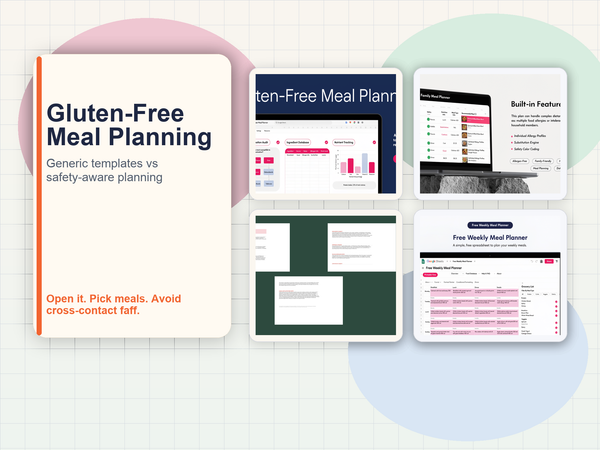
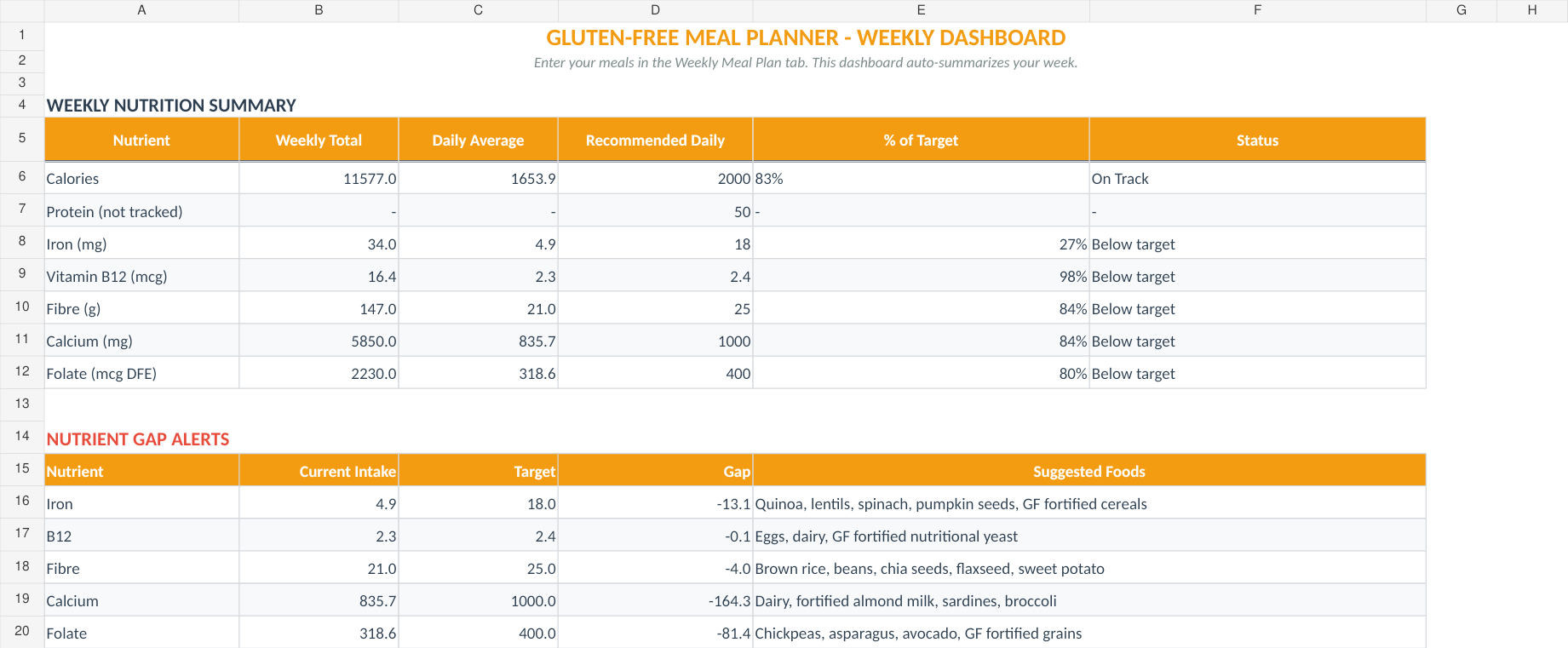
Start with the Free Weekly Meal Planner for a basic week and grocery list. For a dietary workflow, choose the gluten-free planner, vegan meal-prep planner, keto and low-carb planner, multi-allergy family planner. The Meal Planning Bundle puts all four specialist workbooks in one purchase.